How Many Pellets For Betta Fish. Depending on your betta’s diet, feedings may happen up to three times per day at six hours apart. A betta fish needs about 1/4 of a teaspoon of food per day.
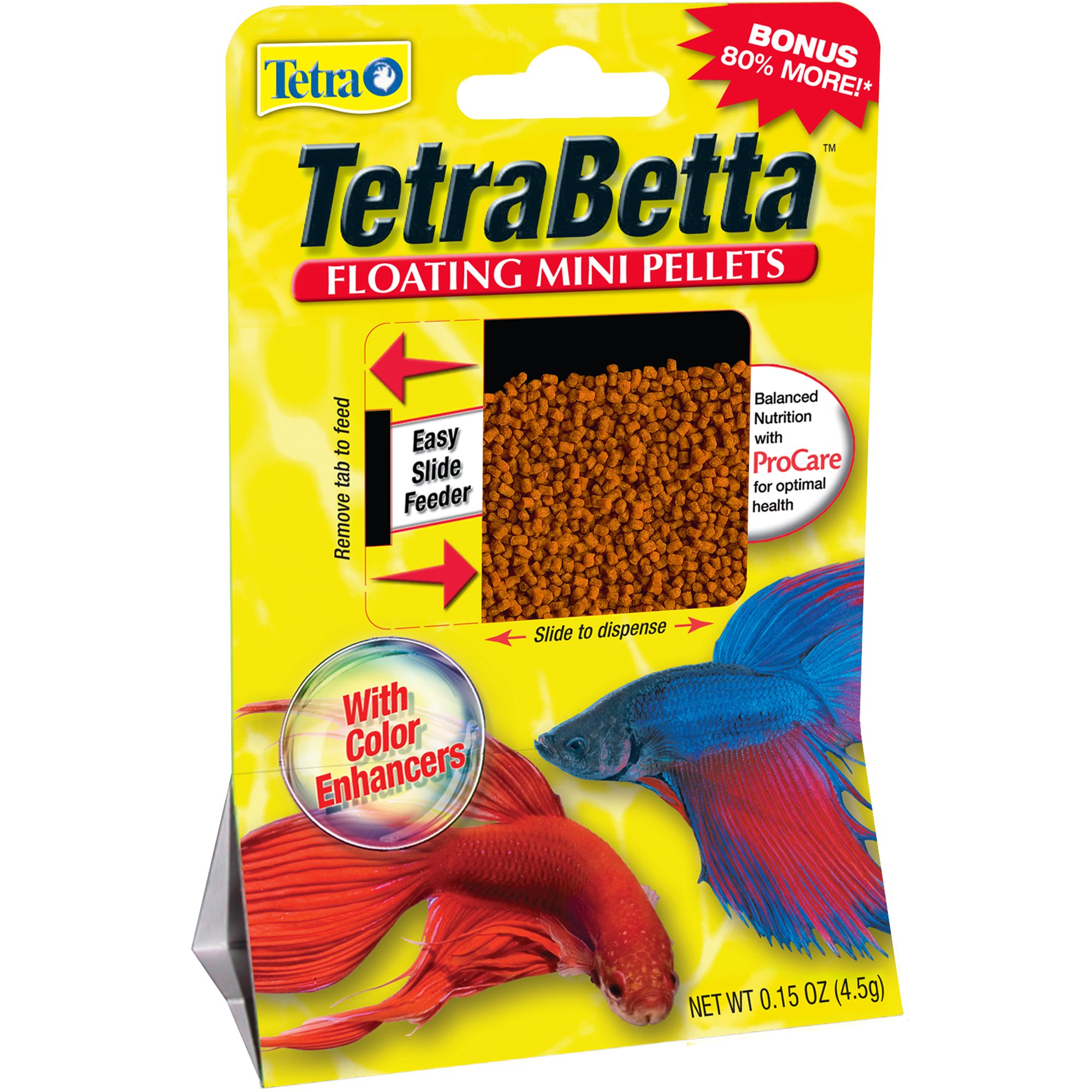
Tetra Betta Floating Mini Pellets, .15 OZ Petco from www.petco.com Observing a Betta
Betta is also referred in the same way as Siamese battle fish. It's native to Southeast Asia, including Cambodia, Laos, Myanmar, Thailand, and Vietnam. It is a tropical fish that is suited to the freshwater aquarium with a excellent gravel substrate. It is popular for its bright colors and is an excellent pet to get started.
In the process of watching a betta
By watching a Betta, you understand its behaviour. Bettas are naturally curious about the world around them. Every sudden change is sure to attract their attention. These fish also have a habit of staring. They can stare at any activity that could be food or a predator.
You can observe the betta's appearance by placing it in a tank with another Betta. It is important to keep the temperature and light level identical. If possible, watch the fish for 30-60 minutes each day. Listening to classical music could aid. If you're watching a betta you must look for patterns of behavior that suggest the fish is happy and healthy.
A healthy betta may swim all around on a daily on a regular basis, making contact with its surroundings. It may be a lazy swimmer or move quickly from one side of the tank to the other. However the betta who is sick may rest at the bottom the tank, and not show sign of joy.
A betta's behavior is influenced by the kind of stress it is exposed to. When the fish detects a danger, they could react up in anger. This is their method to dispel the threat. They can flare at other creatures , or even their reflection. While this can be stressful for your betta, minor instances inflamedness can be controlled.
Watching a wild betta
A visit to a wild betta may be an exciting experience. They are extremely attracted by their surroundings and they are keen to learn more about their environment. While they're easy to care for and maintain, you might be surprised at some of their intriguing behaviors. Here are some of the indicators you might notice as you look at one in its natural environment:
Bettas are predators. They are often prey for animals, which is why they are highly attentive to movements about them. That means they're extremely alert, and can sit still when they are watching. While you're watching the species, keep an ear out for any aggressive behavior that you notice.
If you're keen to observe the wild betta, you'll need to comprehend their environment. Bettas reside in extremely structured habitats, meaning they don't require much space. They spend the majority of their time hiding in vegetation. Their fins are tiny, which makes them difficult detect. Additionally, their muddy brown color makes them difficult to discern.
Another sign of aging Bettas is their lethargy. Bettas who are young should be alert, but if seem to be tired, they could be exhibiting signs of illness. Additionally, they might not be as interested in foods as they once were. You will also notice reductions in their wiggle dances.
Being a spectator of a captive beta
A close-up view of a betta an excellent method of teaching students about the biology of betta frogs. Bettas are tropical fish , and they prefer water that's between 72 and 8 degrees Celsius. They have issues with cold water because it makes them feel lazy and reduces their immune system. Water changes that are frequent stress them out. Their name comes from their Malay"betah," which means "betah," which means "fighter," referring to their ability to endure in uninhabitable water.
It is possible to observe Betta's behavior in an aquarium for a better understanding of what makes it move better or behave in one manner. It is also possible to analyze its reactions to various environments, like the temperature or rocks. You could also ask them to do their own research. They can come up with predictions of how the fish will behave in various situations.
Another method to learn about bettas is through watching their feeding habits. Bettas prefer floating pellets over fish flakes. They also require coming close to the surface in order in order to refill their labyrinth, and they aren't a fan of a tank with a deep bottom.
Bettas tend to be housed in tiny aquariums, but there are certain factors to remember when caring for one. Bettas are highly vulnerable to a variety of common freshwater fish diseases. This includes ich, or White Spot Disease, caused by the Ichthyophthirius multifiliis parasite that is present in a number of freshwater aquariums for fish. If this parasite infects fish, it creates white spots on its body and they can be easily visible. The fish may also clench its fins or hang listlessly on the surface water.
Feeding a better
Bettas need access to the water to breathe. The labyrinth organ in the betta's body allows it to draw oxygen from air. This means that you do not need to purchase an air compressor in order to keep your dog happy and healthy. They also need space to swim and hide. The bigger the tank, the better.
Bettas can consume up three pellets each time they consume food, which is why you'll need be sure to prepare enough food. It's also vital to soak dry food items ahead of time. The right quantity is crucial to its health and well-being.
Doing too much to your betta can cause digestive issues. If your dog eats regularly, they'll feel constipated which can trigger many health issues. Your betta may also appear in a state of euphoria and will spend the majority the day in a sleepy state. This could mean your betta is suffering from SBD or is overfeeding.
When selecting the food you will supply your Betta with, make certain that you find a food that is rich in nutrients and is free contamination by harmful bacteria. Bloodworms and blood shrimp can be found in ponds and pools and are an excellent complement to the diet of your pet's betta.
Observing a betta in captivity
A betta's observation in its tank can be an intriguing experience. Learn about the behavior of the animal and how it reacts to different situations. You can also draw one of a beta and write about its characteristics, dimensions, and colors. Compare a male and a female betta and observe the way they feed. Additionally, you can study how different kinds of food impact the behavior of bettas.
Bettas do not reside in large pools. They are much more comfortable in smaller, enclosed spaces. Their natural habitat is a shallow body of aqua that is full of vegetation. They spend the majority of their time in vegetation. This means that they are in constant contact with debris and leaves.
Bettas are native to watery, shallow habitats located in Southeast Asia. They are adapted to being in small quantities of water that is low in oxygen. Bettas have evolved to survive within these environments by creating the special organ known as a labyrinth. The organ allows them to breathe air right from the top of the ocean. Their diet is based on insects as well as their larvae.
Bettas can be peaceful, but they might also be aggressive towards other fish. If you don't wish to disturb your male betta's peaceful life it is recommended to place him in a separate tank. A male Betta might attack another male that is in close proximity.
Watching a betta move in the wild
Being able to observe a betta in its natural habitat is an excellent chance to observe the way it does in wild. Bettas are territorial species. They will fight to establish their territory. Males or females, they often ram, or get into other fish. They might also grab the fins off other fish. To stay safe the bettas require their own comfortable refuge. An underwater cave or a densely tree-lined corner may be a ideal place to be.
It is possible to look at the behaviour of a betta fish to determine how content or stressed it is. If it is stressed, it might spit or flake its fins, or otherwise react to your presence. If the fish appears unhappy (or bored), it might even be aggressive.
The betta is an ornamental fish , which is popular across the world. Large fins attract interest. The aggressive nature of fish makes them known as "fighting fish." The way you observe their behavior will help you determine the overall health of them and also the emotional health of a given fish when being fed.
The most important thing that you need to remember when looking at a betta the wild is to watch the animal closely. Bettas come in different colors as well as the most popular being black, yellow, blue, clear, and albino. Male bettas are generally more bright than female. Their fins can differ in length. Males generally have bigger fins than females. They can also have the distinct tail, which can become rotten.
Be sure to spread more frequent meals. It is recommended to feed your betta fish two to four pellets, once or twice per day. How many bio gold pellets should i feed my betta?
Whether You’re Buying Betta Fish Food Pellets Or Other Betta Foods, There Are A Few Things You Should Consider.
I feed mine 6 a day, spread throughout 3 feedings of 2 pellets each. Feeding a variety of different foods will provide the array of nutrients a betta fish needs to thrive. Frozen foods such as daphnia and mosquito larvae are also a good option and can be.
Never Feed The Betta Fish All.
Suggested betta fish feeding schedule monday: If, on the other hand, your betta fish is still. A betta fish needs about 1/4 of a teaspoon of food per day.
In The Wild, Bettas Sometimes Eat Small Insects That Land On The Water, So Naturally, Pellets Are More Effective.
However, feel free to change the quantity per your choice or the bettas’. How often should you feed a betta fish bloodworms? When someone just got their first betta fish, it can be hard to figure out how much food to give it.
In This Article, We'll Talk About The Amount Of Food Betta Fish Need, A.
Live foods such as brine shrimp and bloodworms are a great source of protein for bettas. A good amount to feed a betta is between 4 to 6 pellets a day. Most types of betta fish pellets can be fed once daily or more.
If You Have To Feed More Than Eight Pellets, Start With Half Of The Amount,.
It’s important to make sure that the mini pellets you’re feeding are smaller than the betta’s eyeball. The total pellets you’ll probably want to feed your betta is 4 to 8 depending on their size. It would be best to feed your happy and healthy betta fish twice daily, with a break of between six and eight hours between each feeding.
Share
Post a Comment
for "How Many Pellets For Betta Fish"
Post a Comment for "How Many Pellets For Betta Fish"